

A cough that hasn’t gone away after several weeks is easy to dismiss. It could be an infection, allergies or something else.
Most persistent coughs are not caused by lung cancer, but they still deserve attention.
Lung cancer symptoms and treatment are not the same for everyone. Some people have no symptoms in the early stages. Others notice changes in their breathing, develop chest pain or start losing weight without knowing why.
November is Lung Cancer Awareness Month, a time to talk about recognising symptoms, understanding screening and learning what today’s treatment options can offer.
Why Lung Cancer Awareness Matters
Lung cancer is one of the most serious cancer challenges worldwide.
According to the International Agency for Research on Cancer (IARC), lung cancer remained the most commonly diagnosed cancer and the leading cause of cancer death globally in 2024.
Source: IARC Lung Cancer Awareness Month 2026 . Figures are global estimates.
Diagnosis and treatment have changed in recent years, especially with advances in genetic testing, targeted medicines and immunotherapy. Knowing when to seek medical advice is still an important first step.
What Are the Early Warning Signs of Lung Cancer?
Lung cancer doesn’t always cause symptoms at first. When symptoms do appear, they can resemble other respiratory conditions.
Persistent Cough
A cough that doesn’t clear up or becomes noticeably worse.
Coughing Up Blood
Blood in your mucus or sputum, even in small amounts.
Breathing Difficulties
New or worsening breathlessness, wheezing or difficulty breathing.
Chest or Shoulder Pain
Discomfort that may worsen when breathing deeply or coughing.
Unexplained Weight Loss
Losing weight without making changes to your diet or activity.
Repeated Chest Infections
Pneumonia or bronchitis that keeps returning or doesn’t clear.
Smoking is the main risk factor, but people who have never smoked can also develop lung cancer. Second-hand smoke, radon, air pollution and certain workplace exposures can increase risk.
When to get medical help: Persistent or unexplained changes should be assessed by a doctor. Coughing up blood needs prompt medical attention. Severe breathing difficulty or significant bleeding requires emergency care.
Who Should Get Screened for Lung Cancer?
There is an important difference between screening and diagnosis. Screening is for people without symptoms who meet certain risk criteria. Diagnostic tests investigate symptoms or suspicious findings.

Lung Cancer Screening
Screening checks for lung cancer in people without symptoms who meet certain risk criteria.
Low-dose CT can help detect some lung cancers before symptoms appear. Ask your doctor whether screening is appropriate for your risk.
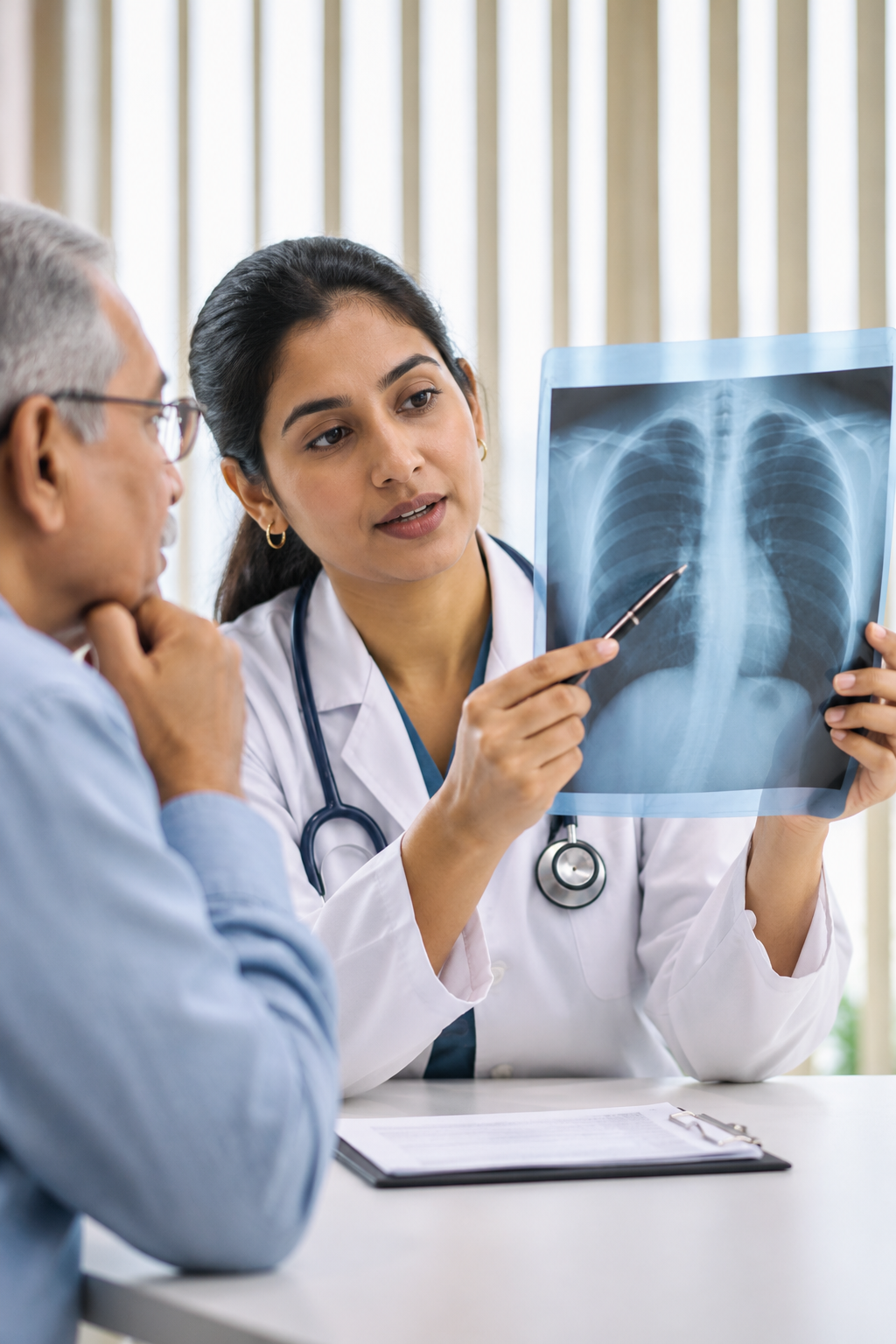
Diagnostic Evaluation
Diagnostic tests investigate symptoms such as a persistent cough, breathlessness or coughing up blood.
If symptoms are present, speak to a doctor rather than waiting for a routine screening appointment.
Who May Be Eligible for Low-Dose CT Screening?
For example, the American Cancer Society recommends annual low-dose CT screening for people who meet the following criteria.
People who currently smoke or previously smoked and have a history of at least 20 pack-years. One pack-year means smoking an average of one pack per day for one year.
Screening recommendations vary by country and health organisation. Discuss your personal risk and the benefits and limitations of screening with a healthcare professional.
How Is Lung Cancer Diagnosed?
A scan can show something suspicious in the lung, but it doesn’t always tell doctors whether that finding is cancer.
Depending on the symptoms and scan results, doctors may recommend several investigations.
CT Imaging
CT helps doctors examine suspicious areas in the lungs in greater detail.
Additional Staging Tests
PET-CT may help assess whether cancer has spread. Brain MRI is used in selected situations.
Biopsy and Pathology
A tissue sample is examined to confirm the diagnosis and identify the cancer type.
Biomarker Testing
For many patients with non-small cell lung cancer, markers such as EGFR, ALK and PD-L1 help guide treatment.
The two main types are non-small cell lung cancer and small cell lung cancer. Treatment decisions depend on the type, stage and other test results.
Question to ask your doctor: “Do we have all the pathology, staging and biomarker results needed to decide on treatment?”
What Lung Cancer Treatment Options Are Available Today?
Treatment depends on the cancer type, stage, test results and the patient’s overall health.
Surgery
Surgery may be recommended for some patients with early-stage lung cancer.
Depending on the tumour and lung function, surgeons may remove part of a lung or an entire lobe.
Some operations can be performed using minimally invasive techniques.
Radiation Therapy
Radiation uses high-energy beams to treat cancer.
For selected early-stage lung tumours, stereotactic body radiation therapy (SBRT) can deliver precisely targeted radiation.
CyberKnife is one system used for this approach. It delivers radiation and is not an operation.
Targeted Therapy
Some lung cancers contain genetic changes that may respond to targeted medicines.
These treatments are suitable only when the relevant changes are found and the clinical situation supports their use.
Immunotherapy & Chemotherapy
Immunotherapy helps the immune system recognise and attack certain cancer cells.
Chemotherapy uses medicines to destroy or slow cancer cell growth.
Doctors may recommend these treatments alone or in combination.
There is no single treatment that works for everyone. Pathology results, cancer stage, biomarker findings and overall health help doctors recommend a suitable plan.
What Should You Ask Before Choosing Treatment?
A lung cancer diagnosis can bring several decisions at once. Write down your questions before the next specialist appointment.
- What type and stage of lung cancer do I have?
- Do I need biomarker testing before choosing treatment?
- What benefits and side effects can I expect?
- Is the aim to cure the cancer, control it or relieve symptoms?
- How long is treatment expected to continue?
- Would a second opinion help clarify my treatment options?
If you’re considering care abroad, also ask how medicines, follow-up appointments and complications will be managed after returning home.
Considering Lung Cancer Treatment in India?
Some international patients consider India when seeking another specialist opinion, comparing hospital options or exploring treatments that may be difficult to arrange locally.
India has hospitals offering thoracic surgery, radiation therapy, medical oncology and molecular testing. Services and availability differ between hospitals.
Before Making Travel Arrangements
- Ask the prospective hospital to review your existing scans and medical reports.
- Confirm whether any additional diagnostic tests are needed.
- Request a written estimate explaining the proposed treatment and hospital stay.
- Check which medicines, investigations and services are included or excluded.
- Discuss ongoing treatment and follow-up care with your current oncologist.
For cancer care involving repeated treatment cycles, travelling abroad may not be suitable for every patient. Decisions about travel and continuity of care should involve the treating doctors.
You may also find Zinek’s medical travel journey guide and Indian medical visa guide useful when planning your trip.
Already Have Your Lung Cancer Reports?
If you’re considering treatment in India, you don’t have to start by contacting several hospitals individually.
Zinek Healthcare helps international patients coordinate enquiries with Indian hospitals and specialists.
The team can help request hospital options, specialist review arrangements, written treatment estimates and appointments.
Zinek can also assist with visa documentation, travel planning and accommodation coordination.
Ask our team how to share your medical reports securely. Medical decisions remain with treating specialists.
Frequently Asked Questions
Can someone who has never smoked develop lung cancer?
Yes. Although smoking is the leading risk factor, lung cancer also occurs in people who have never smoked. Other risks include second-hand smoke, radon, air pollution and certain workplace exposures.
What is the best screening test for lung cancer?
Low-dose CT is the recommended screening method for people who meet relevant high-risk criteria. Screening is meant for people without symptoms, and eligibility should be discussed with a healthcare professional.
Can lung cancer be treated without surgery?
Yes. Depending on the cancer type and stage, treatment may include radiation, chemotherapy, targeted therapy or immunotherapy. Some patients receive a combination.
Is CyberKnife used for lung cancer treatment?
CyberKnife can deliver stereotactic radiation for certain lung tumours. It is not a surgical operation and is not suitable for every case. A radiation oncologist can assess whether it is appropriate.
Can I seek a second opinion in India before travelling?
Some Indian hospitals can review existing scans and medical reports before an international patient travels. They may request additional information or tests. Zinek Healthcare can help coordinate these enquiries.
Medical Sources & References
- IARC: Lung Cancer Awareness Month 2026
- American Cancer Society: Signs and Symptoms of Lung Cancer
- American Cancer Society: Lung Cancer Screening Guidelines
- National Cancer Institute: Non-Small Cell Lung Cancer Treatment
- American Cancer Society: Radiation Therapy for Lung Cancer
This article provides general educational information and does not replace medical advice, diagnosis or treatment from a qualified healthcare professional.