
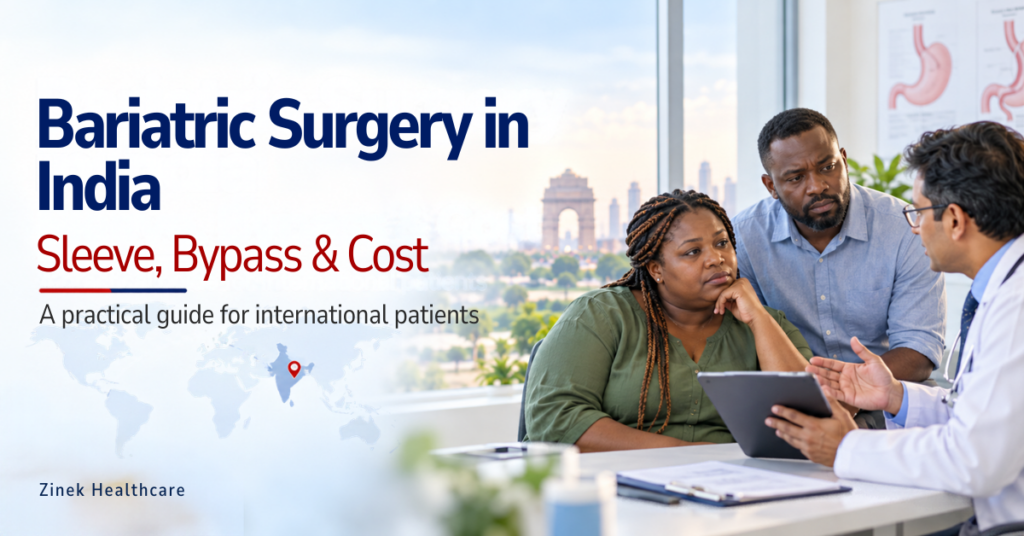
Bariatric surgery in India for international patients is usually considered when weight begins to affect health, movement, sleep, diabetes, blood pressure, or daily life.
For patients from Kenya, Tanzania, Mauritius, Oman, Kuwait, UAE, and other GCC countries, the decision is rarely casual. Many have already tried diets, walking, gym plans, fasting, smaller portions, or weight-loss medicines. Some lose weight for a few months. Then it comes back.
Patients from Kenya, Tanzania, Uganda, and nearby countries can also read this guide on medical tourism to India from Africa to understand travel planning, hospital coordination, and treatment support.
At that point, the question becomes more serious.
- “Do I need medical weight-loss support?”
- “Which option is right for me: gastric sleeve, gastric bypass, or gastric balloon?”
- “What will it cost in India?”
- “How long will I need to stay?”
- “Who will guide me before and after travel?”
This guide explains bariatric surgery options in India, how they differ, who may qualify, how cost is usually planned, what recovery involves, and what international patients should confirm before booking flights.
Bariatric Surgery Is Not Liposuction
This is one of the biggest misunderstandings.
Bariatric surgery is not liposuction.
Liposuction removes fat from selected body areas. It may help with body shape, but it does not treat obesity, diabetes, sleep apnea, or weight-linked health risks.
Bariatric surgery works differently. It changes how the stomach, and sometimes the digestive system, handles food. It is usually discussed when obesity is affecting health or daily life.
So the real question is not, “How do I remove fat?”
The real question is, “Do I need medical support for weight loss?”
A bariatric surgeon can answer that only after reviewing BMI, health history, current medicines, blood reports, eating habits, previous weight-loss attempts, and existing health risks.
Can Bariatric Surgery Help With Type-2 Diabetes?
For many patients, the concern is not only weight. It is diabetes.
Bariatric and metabolic surgery may help improve metabolic health in some patients with obesity and type-2 diabetes. But results vary. No patient should be promised diabetes reversal or that medicines will stop after surgery.
The doctor will look at BMI, diabetes duration, HbA1c, current medicines, insulin use, kidney function, heart health, blood pressure, eating patterns, and overall fitness before giving advice.
That is why this section needs care.
Bariatric surgery can be part of a metabolic health discussion, but it should never be sold as a guaranteed diabetes cure.
Who May Qualify for Bariatric Surgery?
The 2022 ASMBS and IFSO guidelines recommend metabolic and bariatric surgery for people with BMI 35 or above, regardless of whether they have obesity-related conditions. The guidelines also say surgery should be considered for people with BMI 30 to 34.9 when metabolic disease is present. ASMBS
These are guidelines, not automatic approval.
A surgeon still needs to review the full case. That includes medical history, blood reports, previous surgeries, heart risk, sleep apnea, blood pressure, diabetes status, current medicines, and readiness for long-term food changes.
For Asian patients, BMI-related risk may be assessed differently in some medical contexts. So patients from Mauritius, Bangladesh, the GCC, or nearby regions should not decide only from an online BMI calculator.
What Bariatric Surgery May Cost in India
Cost is often the first question for self-paying families.
Apollo’s patient information pages show laparoscopic sleeve gastrectomy and laparoscopic gastric bypass in India commonly discussed around ₹2 lakh to ₹4 lakh, but this should be treated as an indicative planning range only. Final cost depends on the procedure, hospital, surgeon, room category, tests, anaesthesia, medicines, hospital stay, dietitian support, medical condition, and follow-up needs. Apollo Hospitals
Do not compare only the headline number.
Ask what is included. Ask what is excluded. Ask whether the estimate covers doctor fee, hospital stay, investigations, medicines, ICU possibility, follow-up visits, and extra cost areas.
A written estimate matters because international patients cannot afford confusion after landing in India.
Before booking flights, international patients can request a written treatment estimate based on BMI, medical reports, health history, and doctor review.
Robotic Bariatric Surgery: Is It Needed for Everyone?
Some patients search for robotic bariatric surgery because it sounds advanced.
Robotic surgery may be available in some Indian hospitals, but it is not automatically needed for every patient. The choice between laparoscopic and robotic surgery depends on surgeon advice, hospital setup, patient health, case complexity, and cost.
Do not choose the method because the word sounds modern.
Ask the surgeon what fits your case and why.
Hospital Stay, Recovery and Nutrition
Many bariatric procedures may involve a short hospital stay, often around a few days, but this depends on the patient’s health, procedure type, recovery, and surgeon advice. Apollo’s patient pages mention short hospital stays for laparoscopic sleeve and bypass procedures, but international patients should still plan extra time for review and fit-to-fly advice. Apollo Hospitals
The surgery is one part of the journey.
After surgery, patients usually need staged diet guidance, hydration planning, protein intake, vitamins, walking, wound care, and follow-up. This is where long-term success is built.
If you return to Kenya, Mauritius, Oman, Kuwait, UAE, or Tanzania, your diet plan should be realistic for your home food habits too. Ask for guidance you can follow after returning home.
What International Patients Should Confirm Before Travel
Do not book flights first.
Before travel, confirm doctor review, likely procedure, written estimate, expected stay, medical visa documents, attendant plan, recovery days, follow-up schedule, and return travel advice.
India’s official e-Visa portal says only two e-Medical Attendant Visas are granted against one e-Medical Visa, so families should check who will travel with the patient before planning tickets. Indian Visa Online
If this is your first treatment trip, this medical tourism journey in India guide explains what usually happens before travel, after arrival, during treatment, and after discharge.
Loose Skin and Body Contouring After Weight Loss
Some patients develop loose skin after major weight loss.
It may appear around the stomach, arms, thighs, chest, or back. Body contouring, tummy tuck, arm lift, thigh lift, or liposuction may be discussed later.
Timing matters.
Most surgeons prefer body contouring after weight becomes stable and nutrition is good. It should not be treated as an automatic part of bariatric surgery unless the surgeon advises it.
How Zinek Healthcare Helps Before You Travel
Zinek Healthcare operates as an independent coordination partner. We do not provide medical advice or make clinical diagnoses. Instead, we help bridge the gap between international families and suitable hospital or doctor teams in India.
Patients can share BMI, health history, reports, medicines, diabetes status, weight-loss attempts, and treatment goals. Zinek can help coordinate doctor opinions, shortlist hospitals, request written estimates, guide medical visa documents, plan local stay, and support WhatsApp communication before and during the trip.
The goal is simple: help the family reach India with more clarity and fewer surprises.
Patients and attendants should also check the medical visa for India process before booking flights, especially if hospital documents are needed for the visa application.
Families can also review hospitals in India for international patients before shortlisting options for bariatric surgery, diabetes-linked weight management, or recovery support.
FAQs
Is bariatric surgery in India suitable for international patients?
It may be suitable for some international patients after surgeon review. BMI, diabetes, blood pressure, medicines, reports, previous weight-loss attempts, and travel fitness all matter before surgery is advised.
Is gastric sleeve better than gastric bypass?
Not always. Gastric sleeve may suit one patient, while gastric bypass may suit another. Diabetes, reflux, BMI, eating pattern, and long-term health goals can change the recommendation.
Can bariatric surgery help with type-2 diabetes?
It may help improve metabolic health in some patients with obesity and type-2 diabetes. Results vary, so no patient should be promised diabetes reversal or stopping medicines.
How much does bariatric surgery cost in India?
Published hospital pages often show broad planning ranges. The final quote depends on procedure, hospital, surgeon, room category, tests, health risks, stay, medicines, and follow-up.
How long should international patients stay in India?
Hospital stay may be short in many cases, but international patients should plan extra days for recovery, follow-up, diet guidance, and fit-to-fly advice before returning home.