
A cancer diagnosis can shake an entire family.
For many patients in Tanzania, the first few days after diagnosis are filled with fear, questions, and pressure. The patient is trying to understand what the doctor has said. The family is trying to find the right hospital. Someone is searching online late at night. Someone is asking relatives for contacts. Someone is quietly worrying about cost.
This is where many Tanzanian families begin their search for oncology treatment abroad from Tanzania.
Families exploring options can also read more about cancer treatment in India for international patients to understand hospital options, doctor coordination, treatment planning, and cost guidance.
They are not looking for luxury. They are looking for clarity.
They want to know if the cancer can be treated. They want to know which doctor should review the reports. They want to know whether treatment should start quickly. They want to understand the cost before making a decision. Most of all, they want to feel that they are not handling the journey alone.
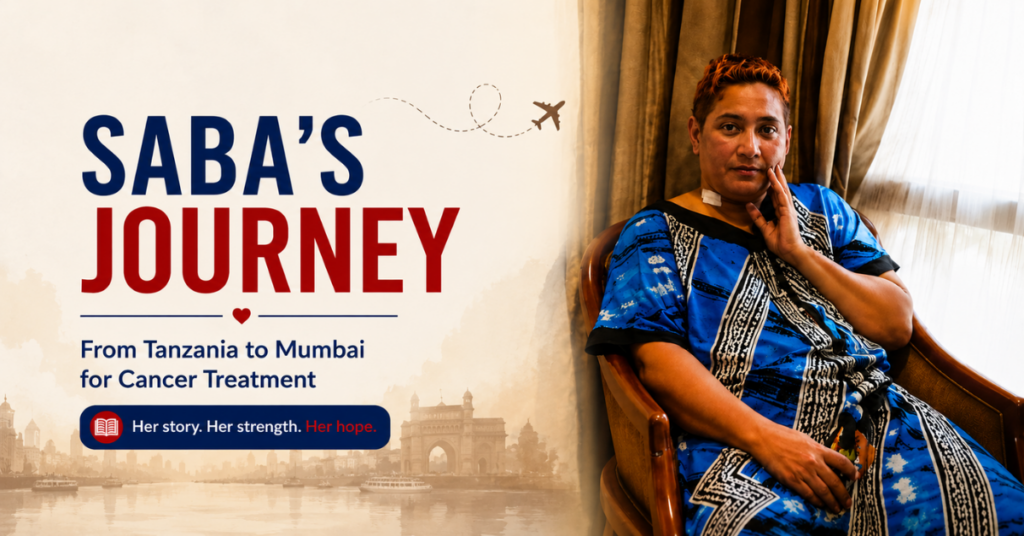
Saba Abdullah’s oncology treatment journey is one such story.
Her case reminds us that medical travel is not only about hospitals and flights. It is about trust, coordination, family support, and the courage to take the next step when everything feels uncertain.
Cancer Care Decisions Are Never Simple for Tanzanian Families
Tanzania has made important progress in cancer care, but the burden remains heavy. GLOBOCAN 2022 estimated 44,931 new cancer cases and 29,743 cancer-related deaths in Tanzania.
Ocean Road Cancer Institute in Dar es Salaam plays a central role in cancer care in the country. Its own website describes it as the only comprehensive specialised facility for cancer care in Tanzania, offering services such as diagnostic imaging, chemotherapy, radiotherapy, palliative care, screening, and laboratory support.
Still, when a family receives a complex cancer diagnosis, they may want a second opinion or advanced treatment planning abroad. Some patients may need specialised surgery. Some may need updated scans. Some may need chemotherapy planning, radiation review, targeted therapy advice, or a wider oncology team.
That is why many families from Dar es Salaam, Arusha, Mwanza, Zanzibar, and other parts of Tanzania explore cancer treatment in India.
India becomes part of the conversation because families are looking for three things:
Better clarity. Faster direction. A treatment plan they can understand.
Who Was Searching for Answers?
In most cancer journeys, the patient is not the only decision-maker.
A spouse may start asking about hospitals. A son or daughter may collect reports. A sibling may contact relatives abroad. A family friend may suggest India. A caregiver may compare treatment costs, visa steps, and travel requirements.
This is common across Tanzanian families.
When the case feels serious, everyone becomes involved. But too many opinions can create more confusion.
Questions families often ask
- Which hospital is right?
- Which doctor should review the case?
- Should the family wait locally or travel?
- How much money should they arrange?
- How long will the patient stay in India?
- Who will guide them after they land?
These are not small questions. They decide the entire medical journey.
For Saba Abdullah and her family, the answer became clearer when they connected with Zinek Healthcare.The Decision to Explore Treatment in India
Choosing oncology treatment abroad from Tanzania is not an easy decision.
It means leaving home at a difficult time. It means trusting doctors in another country. It means arranging money, documents, travel, stay, and hospital appointments while the patient is already emotionally drained.
But for many families, the decision becomes necessary when they need advanced review, quick specialist access, or a stronger treatment pathway.
India is often considered because major hospitals have oncology teams across medical oncology, surgical oncology, radiation oncology, diagnostics, imaging, and follow-up care. Ocean Road’s own radiotherapy page shows that Tanzania has active radiotherapy services, including external beam radiation treatment using cobalt machines and linear accelerators, but some families still look outside the country when they want another opinion or wider treatment options.
For Saba’s family, the goal was simple.
- Find the right hospital.
- Connect with the right doctor.
- Move forward with confidence.
For families planning treatment abroad for the first time, our guide on the medical tourism journey in India explains how report sharing, doctor review, visa planning, travel, hospital admission, and follow-up usually work.
How Zinek Healthcare Became the Support Bridge
When Saba’s family connected with Zinek Healthcare, they were not just looking for a hospital name. They needed someone to simplify the journey.
“From the beginning, the guidance was clear and supportive. Zinek helped us connect with the right hospital and doctor, which made the treatment process smoother for our family.”
That line matters.
Cancer treatment is never just about the diagnosis written on a report.
For the patient, it is fear, uncertainty, hospital visits, test results, and waiting for the next answer. For the family, it is the pressure of choosing the right doctor, arranging money, understanding travel steps, and making decisions quickly without making a mistake.
This is where many families feel lost. They may know they need treatment, but they do not know which hospital to trust, what the estimate includes, how the visa process works, or who will guide them after they land in India.
Zinek Healthcare helped by becoming the support layer between Saba’s family, the hospital, and the care team in India. The role was not just to share a hospital name. It was to bring order to a stressful journey.
When each step is explained clearly, the family feels less alone. That is why guided support matters.
Support may include:
- Collecting and organising medical reports
- Coordinating oncology opinion requests
- Helping shortlist suitable hospitals and doctors
- Sharing treatment estimate guidance
- Helping the family understand hospital requirements
- Supporting medical visa invitation letter coordination
- Guiding travel and stay planning
- Arranging local coordination in India
- Offering WhatsApp-based communication support
- Helping the family ask the right questions before travel
- Staying available through local coordinators during the treatment journey
Reports. Reviews. Tests. Treatment plan. Cost estimate. Visa. Travel. Admission. Treatment. Follow-up.
If one step is unclear, the whole family feels it.Families can also explore hospitals in India for international patients and compare options based on speciality, location, doctor access, and international patient support.
Medical Visa and Travel Planning
For Tanzanian patients planning treatment in India, visa planning should start early.
India’s official e-Visa portal lists e-Medical Visa and e-Medical Attendant Visa categories. It also states that e-Medical Attendant Visa validity is 60 days from the first arrival in India, with triple entry allowed within the visa validity period.
The official portal also mentions that only two e-Medical Attendant Visas may be granted against one e-Medical Visa.
For families, this means the travel plan should not be left until the last minute.
Before booking flights, patients should confirm:
Travel should be planned only after the hospital, visa documents, appointment date, and stay requirements are clear.
Hospital invitation letter requirements
Passport validity
Medical visa eligibility
Attendant visa needs
Expected treatment duration
Appointment date
Stay near the hospital
Return travel flexibility
Zinek’s role here is not to replace official visa rules. The visa decision remains with the authorities. But Zinek can help families understand what hospital documents may be needed and how to prepare the treatment journey in a structured way.
That reduces panic. And during cancer treatment, less panic matters.
Tanzanian families preparing for treatment can review our medical visa guidance for India to understand invitation letters, attendant visa planning, and basic document preparation before booking flights.
What the Treatment Journey Feels Like for a Family
A patient journey like Saba’s is never only clinical.
The family may be staying in a new city. They may be walking into a hospital they have never seen before. They may be listening to new medical terms. They may be trying to understand scans, blood tests, medicines, and treatment steps.
This is where a coordinator can make the process feel less overwhelming.
For Tanzanian families, WhatsApp coordination is especially important. It allows reports, updates, questions, and appointment details to stay in one familiar channel.
- A family member back home can be updated.
- A question can be asked without waiting for the next hospital visit.
- A document can be shared quickly.
- A coordinator can explain what comes next.
- That does not remove the fear of cancer. Nothing does.
- But it gives the family structure.
- It gives them someone to ask.
Why Clear Cost Guidance Matters
Cancer treatment abroad can create financial anxiety.
Families want to know the cost before they travel, but cancer treatment costs can change based on diagnosis, stage, investigations, treatment cycles, surgery, medicines, radiation sessions, hospital stay, and follow-up needs.
This is why “affordable cancer treatment abroad” should never mean “choose the cheapest option.”
The better question is:
What is the right treatment plan for this case, and what is the likely total cost?
For oncology patients, an estimate should clarify:
Cancer treatment costs can change based on tests, treatment type, hospital stay, medicines, and follow-up needs. A written estimate should clearly explain these areas before travel.
Doctor consultation charges
Investigations and scans
Biopsy or pathology review
Chemotherapy plan, if advised
Radiation plan, if advised
Surgery estimate, if advised
Medicines
Hospital stay
ICU possibility
Follow-up visits
Exclusions
Possible extra cost areas
Zinek’s support in cost negotiation and estimate comparison can help families avoid blind decisions. A written estimate gives the family a better base for planning. It also builds trust.
Before making a travel decision, families can get a cancer treatment cost estimate before travel so they can understand likely costs, inclusions, exclusions, and next steps with more clarity.
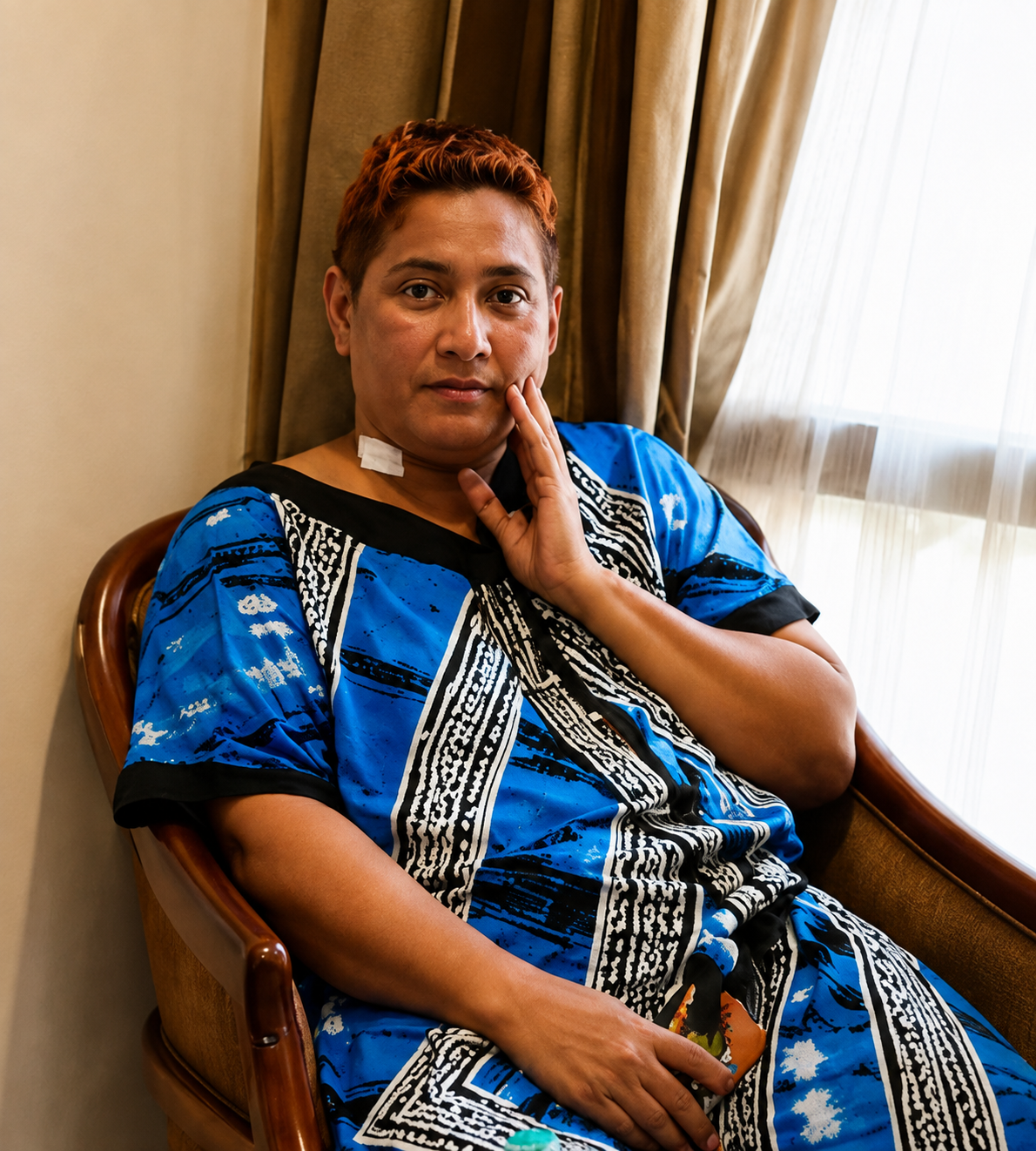
The Human Side of Saba Abdullah’s Journey
Every cancer story has medical details. But behind those details is a person.
A patient who has to stay strong when the family is worried. A family that has to make decisions even when they are scared. A caregiver who has to ask difficult questions.
A medical journey from Tanzania to India can feel heavy at first. But with the right support, it can become more organised, more understandable, and less lonely.
For Saba’s family, the biggest difference was not only hospital access.
It was guided access.They were not left to figure out every step alone. Zinek helped them connect with the right hospital and doctor. The guidance was clear. The process became smoother.
That is the part other families should notice.
A Practical Guide for Tanzanian Families Planning Cancer Treatment Abroad
If your family is exploring cancer treatment in India, start with these steps.
Move from fear to action
A cancer diagnosis can make every decision feel urgent. These steps help families organise reports, understand treatment options, plan travel, and avoid confusion before leaving Tanzania.
Collect the patient’s latest reports, scans, biopsy details, discharge summaries, and current medicines.
Ask for an oncology second opinion before making travel decisions.
Share reports securely with a trusted coordinator or hospital team.
Request hospital and doctor options based on the cancer type and treatment need.
Ask for a written treatment estimate with inclusions and exclusions.
Confirm medical visa and attendant visa document needs.
Plan accommodation close to the hospital.
Keep one family member responsible for WhatsApp communication.
Ask what follow-up will look like after returning to Tanzania.
Do not choose a hospital only by cost. Choose based on clinical fit, clarity, and support.
These steps can help families move from fear to action.
Start Planning on WhatsAppHow Zinek Healthcare Supports Cancer Patients from Tanzania
Zinek Healthcare helps international patients and families plan treatment in India with more clarity.
For oncology patients from Tanzania, support may include report review coordination, doctor opinion support, hospital shortlisting, estimate comparison, medical visa document guidance, airport pickup coordination, local coordinator support, WhatsApp communication, stay guidance, and follow-up coordination.
This support can help families from Dar es Salaam, Arusha, Mwanza, Zanzibar, and other cities feel more prepared before travelling.
Cancer treatment is already hard.
The process around treatment should not make it harder.
Final Thoughts
Saba Abdullah’s oncology journey is a reminder that hope often begins with one clear step. For some families, that step is sharing reports.
For some, it is getting a second opinion. For others, it is finally speaking to someone who can explain the hospital, doctor, cost, visa, and travel process in simple language. A cancer diagnosis may feel like everything has stopped. But the right guidance can help a family move again.
If your family is exploring oncology treatment abroad from Tanzania, do not start with panic. Start with clarity. Ask for a specialist review. Understand the treatment options. Compare hospitals carefully. Plan the visa and stay. Keep communication open.
And most importantly, do not go through the journey alone.
Frequently Asked Questions
How do Tanzanian families start planning oncology treatment in India?
Tanzanian families should start by collecting the patient’s latest medical reports, scans, biopsy details, discharge summaries, and current medicine list.
Once the documents are ready, the next step is to request an oncology second opinion from a suitable hospital or cancer specialist in India.
This helps the family understand whether travel is needed, what treatment options may be considered, and what questions to ask before making a decision.
What visa is needed for cancer treatment in India from Tanzania?
Patients travelling from Tanzania for cancer treatment in India usually need an e-Medical Visa or Medical Visa, depending on their eligibility and official visa rules.
Family members travelling with the patient may apply for an e-Medical Attendant Visa or Medical Attendant Visa. India’s e-Visa process generally allows up to two attendants for one medical visa, but families should always check the latest rules on the official Indian visa portal before booking flights.
A hospital invitation letter, passport details, medical reports, and expected treatment dates may be required during the visa process.
How much does cancer treatment in India cost for international patients?
Cancer treatment cost in India depends on the diagnosis, cancer stage, treatment type, hospital, doctor, investigations, medicines, and expected length of stay.
For some patients, treatment may include chemotherapy, radiation therapy, surgery, biopsy review, PET-CT scans, targeted therapy, or follow-up visits, so the cost can vary widely.
Before travelling, families should ask for a written estimate that separates confirmed costs from possible extra costs such as ICU care, additional scans, medicines, longer hospital stay, and exclusions.
How does Zinek Healthcare support cancer patients from Tanzania?
Zinek Healthcare supports Tanzanian cancer patients by helping with report review coordination, oncology opinion requests, hospital and doctor shortlisting, and treatment estimate comparison.
The team can also guide families with medical visa document preparation, airport pickup coordination, local support in India, stay planning, and WhatsApp-based communication.
This support helps families avoid confusion and understand each step before, during, and after the treatment journey.
Should families choose a hospital based on cost alone?
No. Cost is important, but it should not be the only reason to choose a hospital for cancer treatment in India.
Families should also check the hospital’s oncology experience, doctor suitability, treatment clarity, diagnostic support, communication process, and follow-up care after returning to Tanzania.
A cheaper option may look attractive at first, but the right choice should balance clinical fit, transparent estimate, patient support, and long-term treatment planning.